Buy art in Japan with a dealer at your side.
Two or three days in Japan’s galleries and dealers’ rooms with a former gallerist who spent more than ten years buying and selling with his own money. I make the introductions, I translate, I read the work — and then I tell you, privately and plainly, what I would do.
In Japan, the best rooms are the quiet ones.
A great deal of the art worth buying in Japan never reaches an English-language website.
It hangs in small galleries one floor above the street. It rests in a wooden box on a dealer’s shelf, wrapped in a yellow cloth bag, and comes out when the dealer has decided you are serious. Often there is no price on the wall. The conversation is in Japanese, and a good part of what matters is in what is politely left unsaid.
A visitor with a week and a translation app sees the shopfront. I would like you to see the work that is brought out afterwards — and to know, before you spend, whether it is good, whether it is right, and whether the price is fair.
That is the whole service. I spent more than a decade on the other side of that table. Now I sit on yours.
Before you arrive, in the room, and after you decide.
You travel to Japan as you normally would. For two or three of those days, I plan where we go, come with you, and stay involved until the work is safely on its way home.
Before you arrive
We talk — by video, for as long as it takes — about what moves you, where it will live, and what you are comfortable spending. Then I do the legwork in Japanese.
- A written brief of what we are looking for
- A shortlist of galleries and dealers suited to it
- Appointments made and confirmed in Japanese
- A route that respects your time
In the room
I interpret in both directions: the language, and the manners that go with it. And I look at each work the way a dealer does when it is his own money.
- Quality — is this a strong example, or an ordinary one?
- Condition, signature and seals, box and papers
- Whether the asking price is fair, and how to ask
- My honest opinion, given to you in private
After you decide
Buying is the beginning of the paperwork. I stay with it, working alongside the gallery and specialist fine-art shippers, until the crate reaches your door.
- Invoice and payment terms, explained in English
- Packing, insurance and international shipping
- Export formalities for older works
- Follow-up with the gallery after you are home
What we can look for together
Long enough to look twice.
Nobody should buy a work of art on the first visit. Every programme is built so that you can go back, look again the next morning, and decide with a clear head.
One city, one focus
For the collector who knows roughly what they want — a painting for a particular wall, a first serious piece of Japanese ceramics.
- Pre-trip consultation and brief
- Five to seven appointments
- A second look on day two
- Purchase and shipping support
Two cities, or a deeper search
Tokyo and Kyoto, for instance, with the bullet train between them. Room to compare, to change your mind, and to find the thing you did not know you were looking for.
- Everything in the two-day programme
- Eight to ten appointments in two cities
- A museum hour, to tune the eye
- Written notes on every work considered
Built around one decision
A second opinion on a work you have already been offered. A longer stay. A family visit where one afternoon is set aside for looking.
- Single-day or multi-week
- Any region reachable by rail
- For private clients and their advisers
- Travel designers and concierges welcome
A day might go like this
An illustration only. Your own days are planned around what you are looking for.
Fine Art J-HAT, 1993 and after.
I did not inherit a gallery, and I did not apprentice in one. I walked into this trade from the outside, the way my clients will — and learned it by paying for my own mistakes.
One painting, and most of an hour
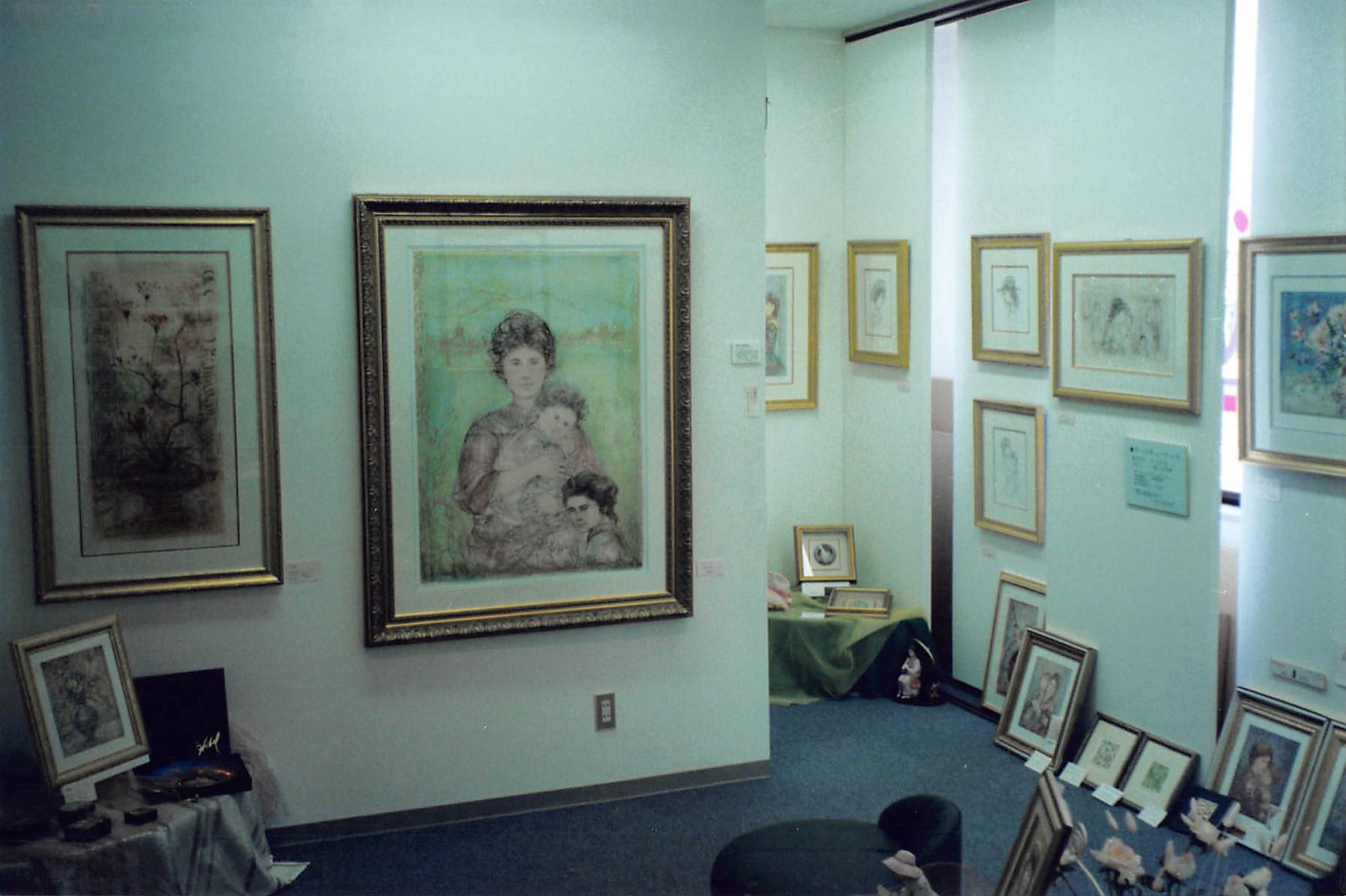
I was a twenty-seven-year-old systems engineer who had just resigned. In the Hibel Museum of Art I stopped in front of a mother and child by Edna Hibel, and stayed there.
I decided to bring her work to Japan. Letter by letter, I negotiated with her son and publisher, Andy Plotkin — in English, by fax, one reply a day across the time difference — and we signed an exclusive agreement for Japan at a Hibel festival in West Palm Beach.
A gallery one floor above the avenue
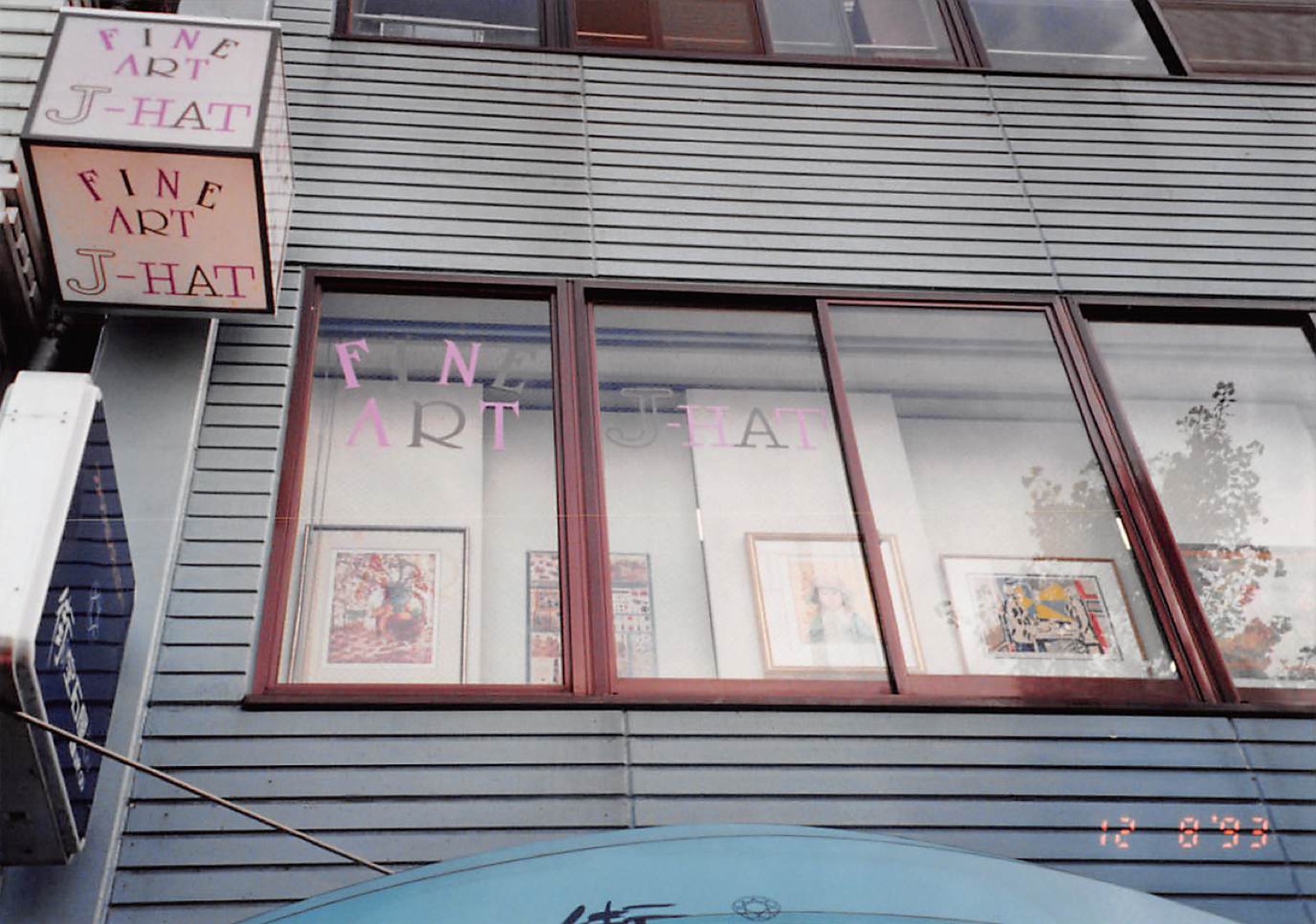
On 8 July 1993 I opened Fine Art J-HAT on Ekimae-ōdōri, the main avenue running from Toyohashi Station. The name stands for Japan, Homestay, Art, Trading: art carried between countries by people who have been welcomed into one another’s homes.
I had one rule. I would not stock a picture simply because it would sell. I bought only what moved me, and I delivered each work to the client’s home and hung it with them, to see how it lived in their own light.
Bringing the artist to Japan
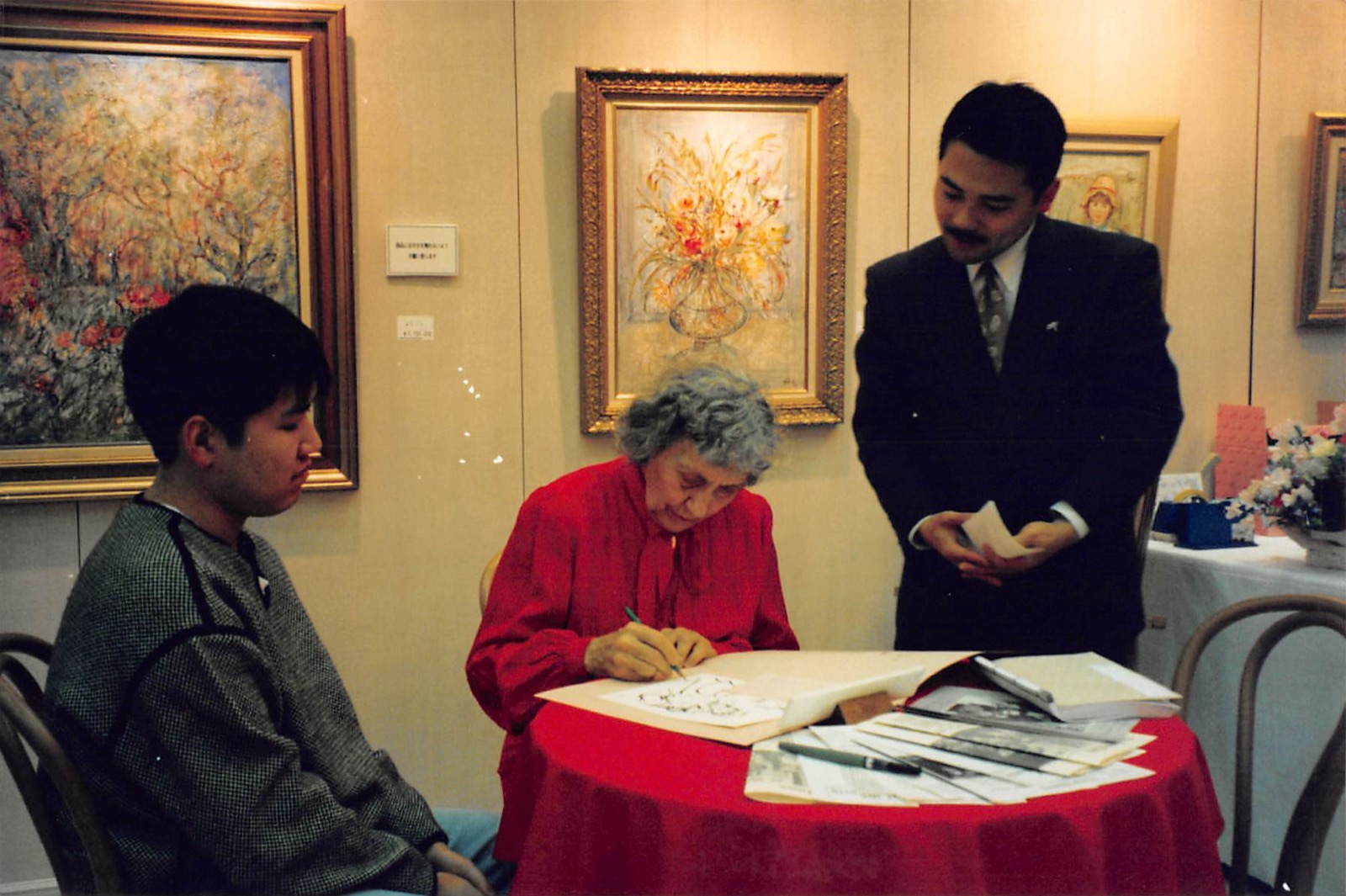
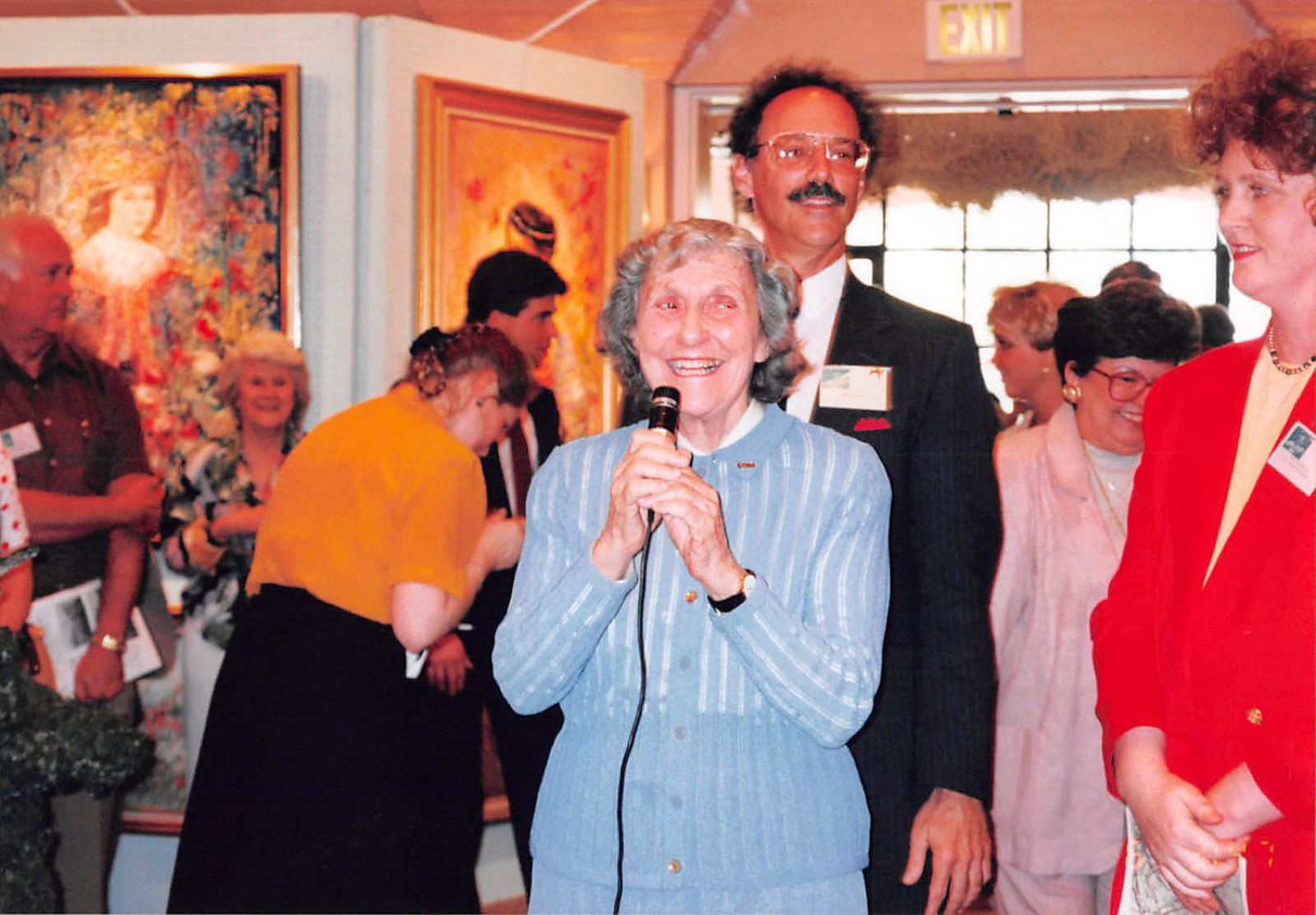
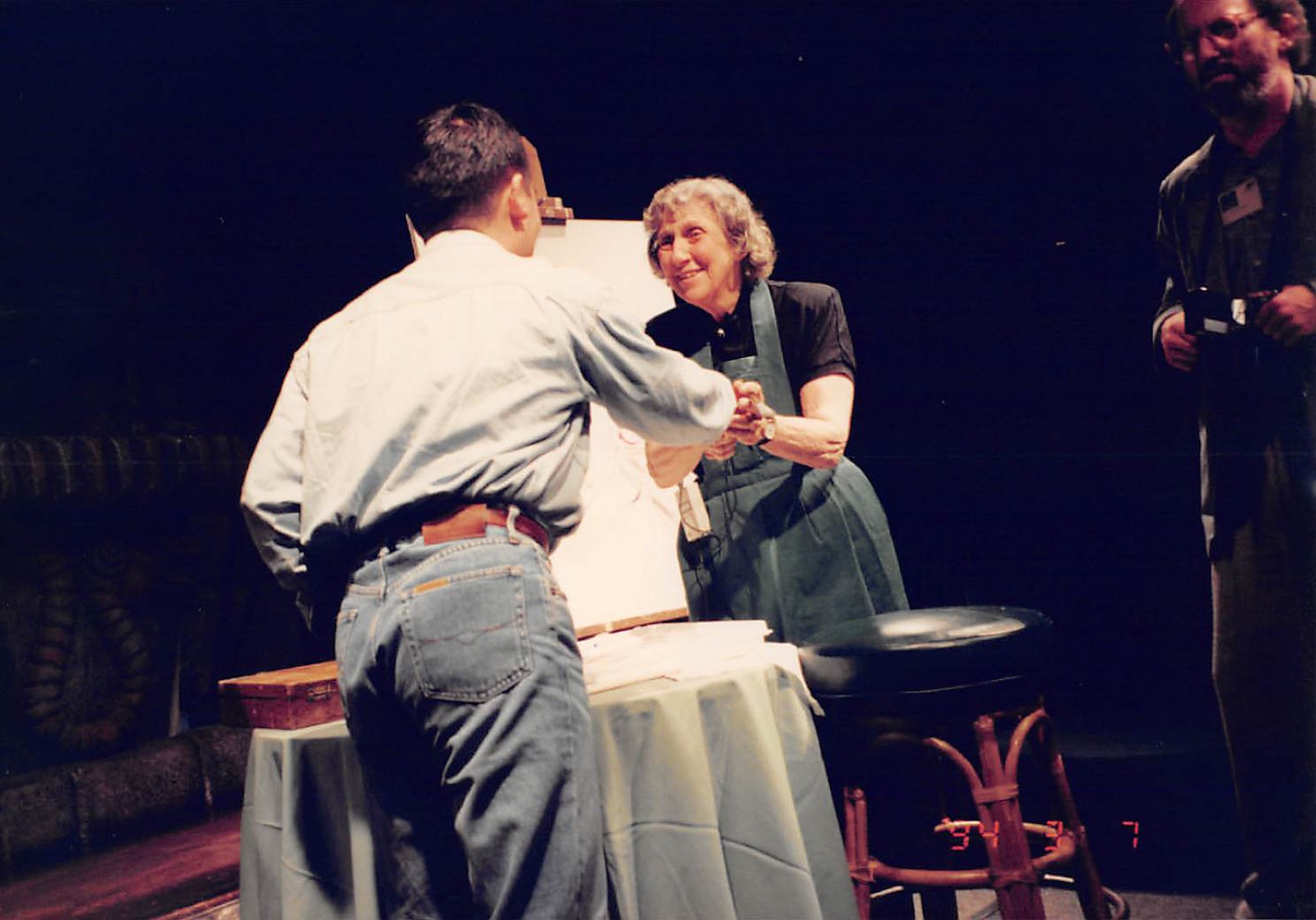
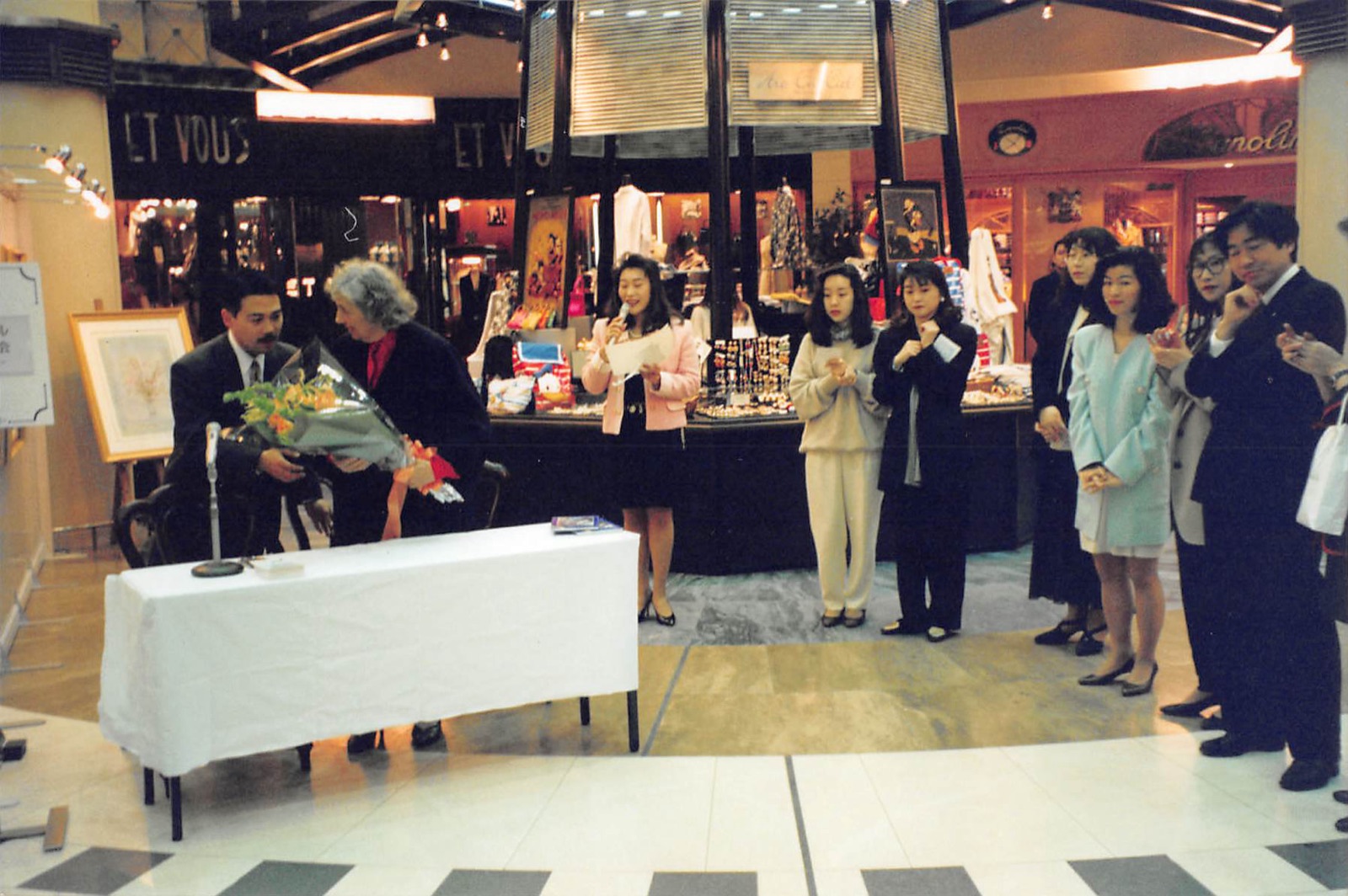
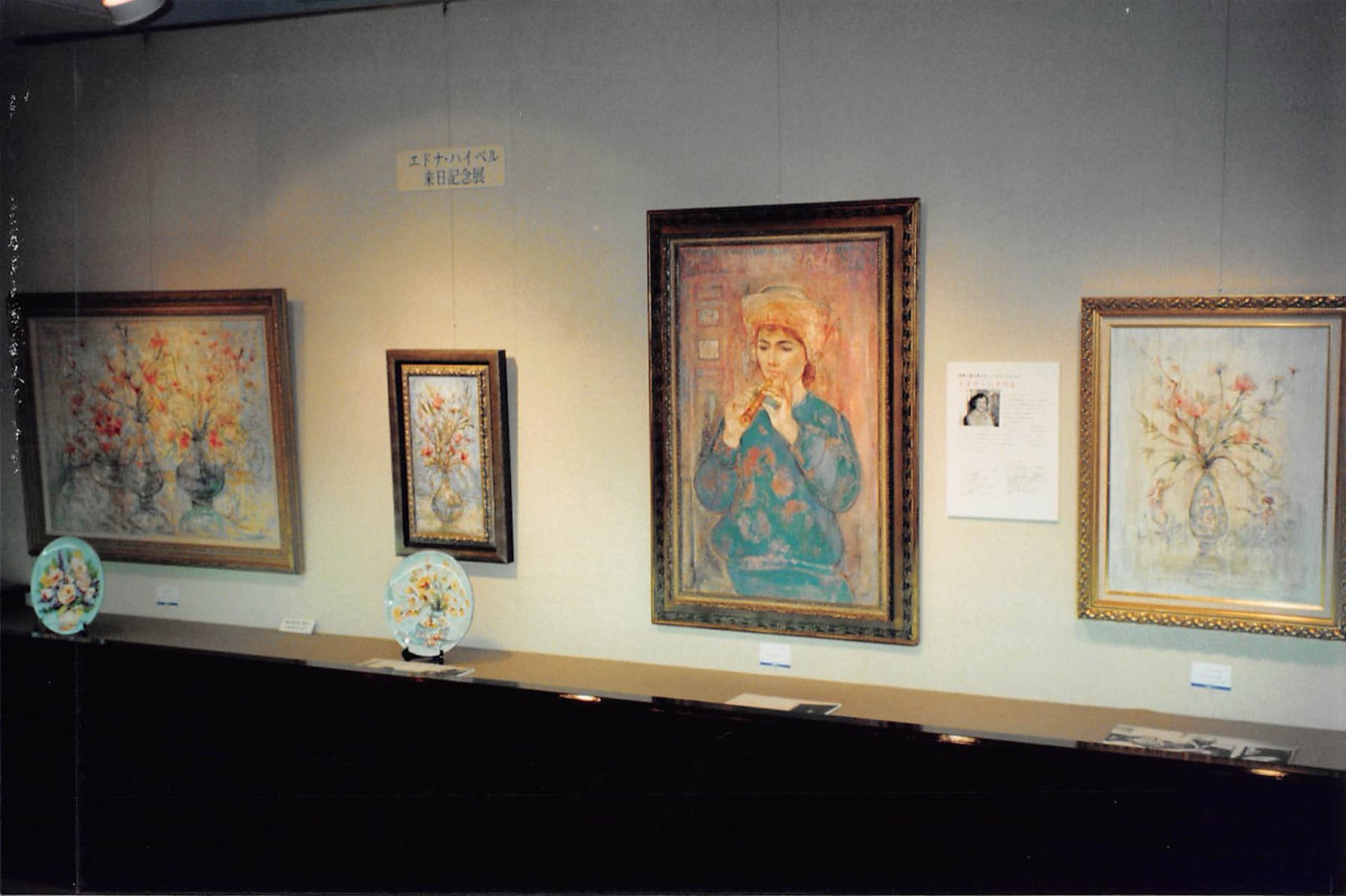
When Edna Hibel, then seventy-seven, sailed around the world with her husband, I met their ship at Nagasaki and organised exhibitions marking her visit — at Daimaru in Kobe and Mitsukoshi in Ikebukuro, Tokyo, among others.
I stood beside her as her interpreter, putting her words to the collectors into Japanese. It is the same work I am offering you, turned around.
Department stores, dealers’ auctions, private walls
The first proposal I carried into the art department of Mitsukoshi Ikebukuro became an exhibition of Japan’s past masters. More department-store exhibitions followed. I imported work from France, Canada and Australia, and bought and sold month after month at the kōkankai — the closed auctions where Japanese dealers trade among themselves.
For one client, a company chairman who built a hall for his community, I found the pictures for its walls, in Japan and abroad, over the course of a long friendship.
From the albums
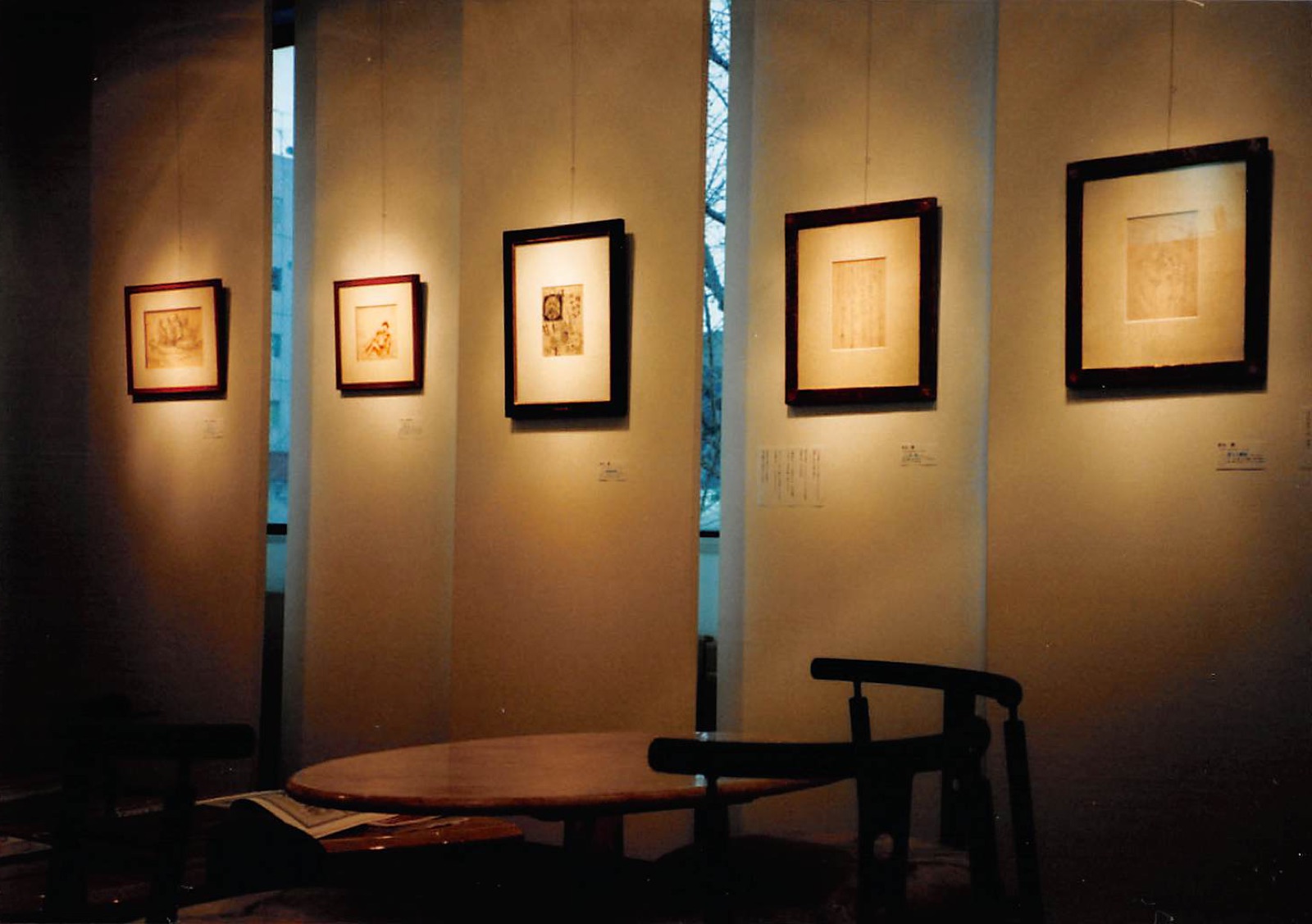
Prints from my own albums, with the camera’s date still stamped in the corner.
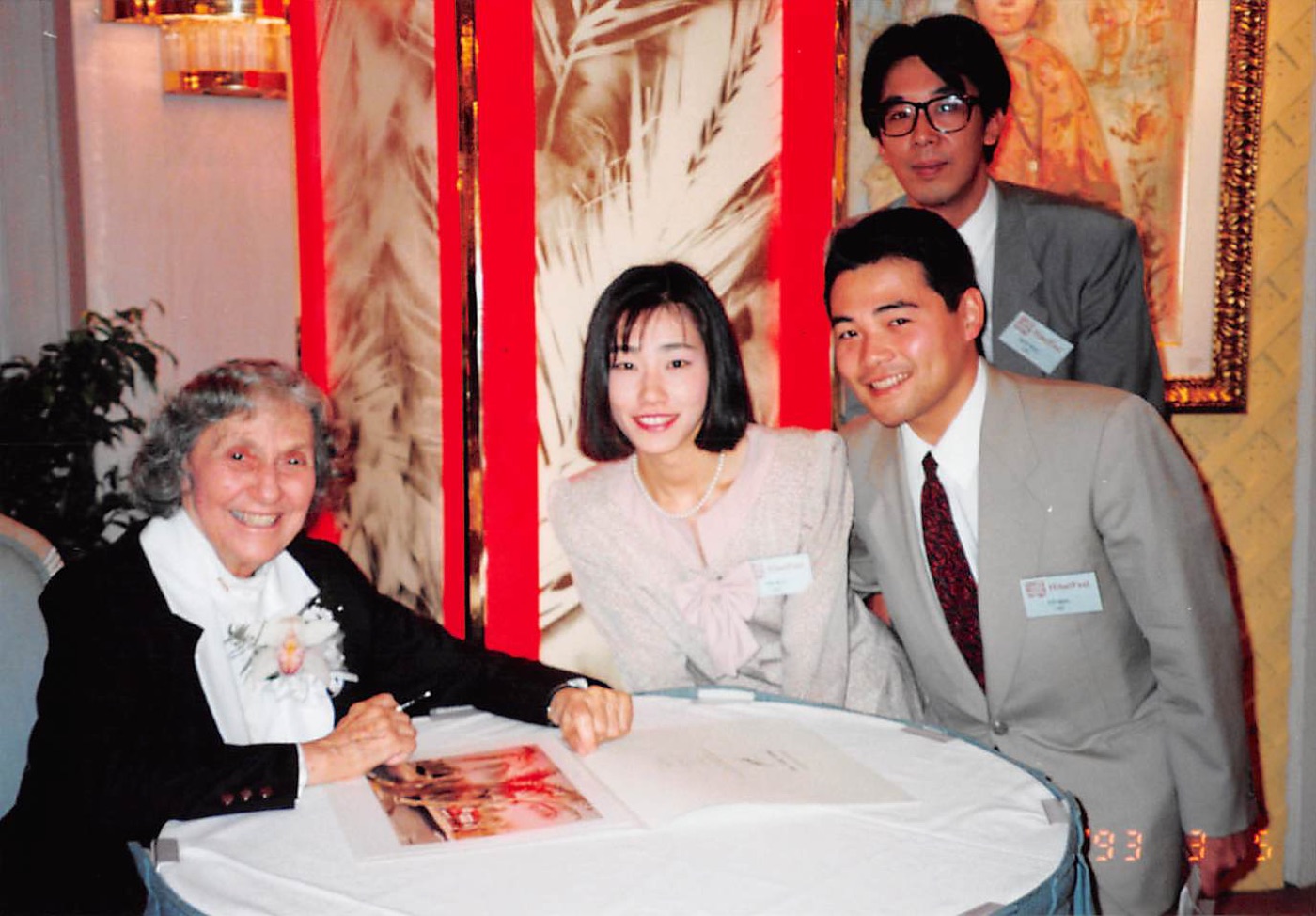
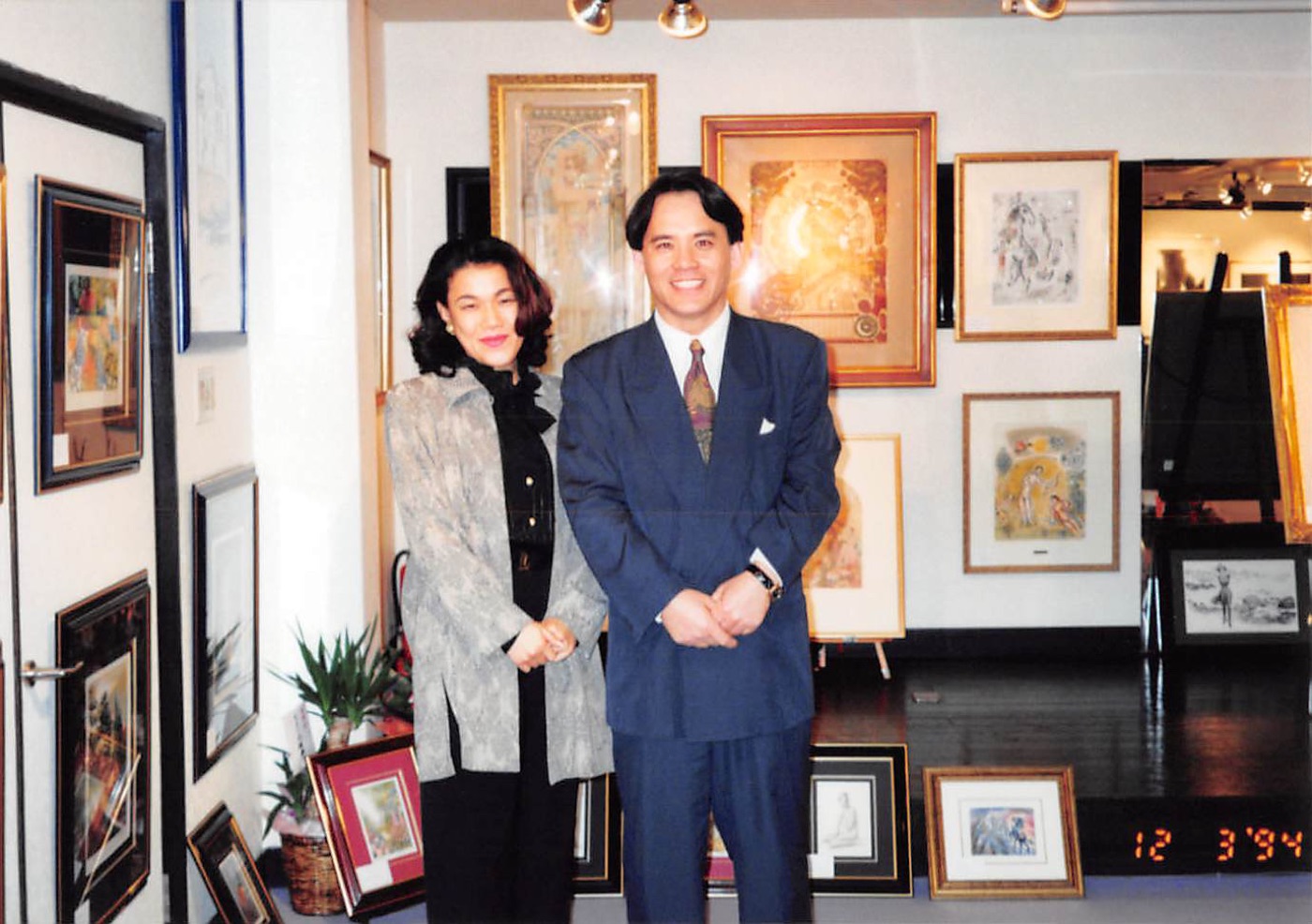
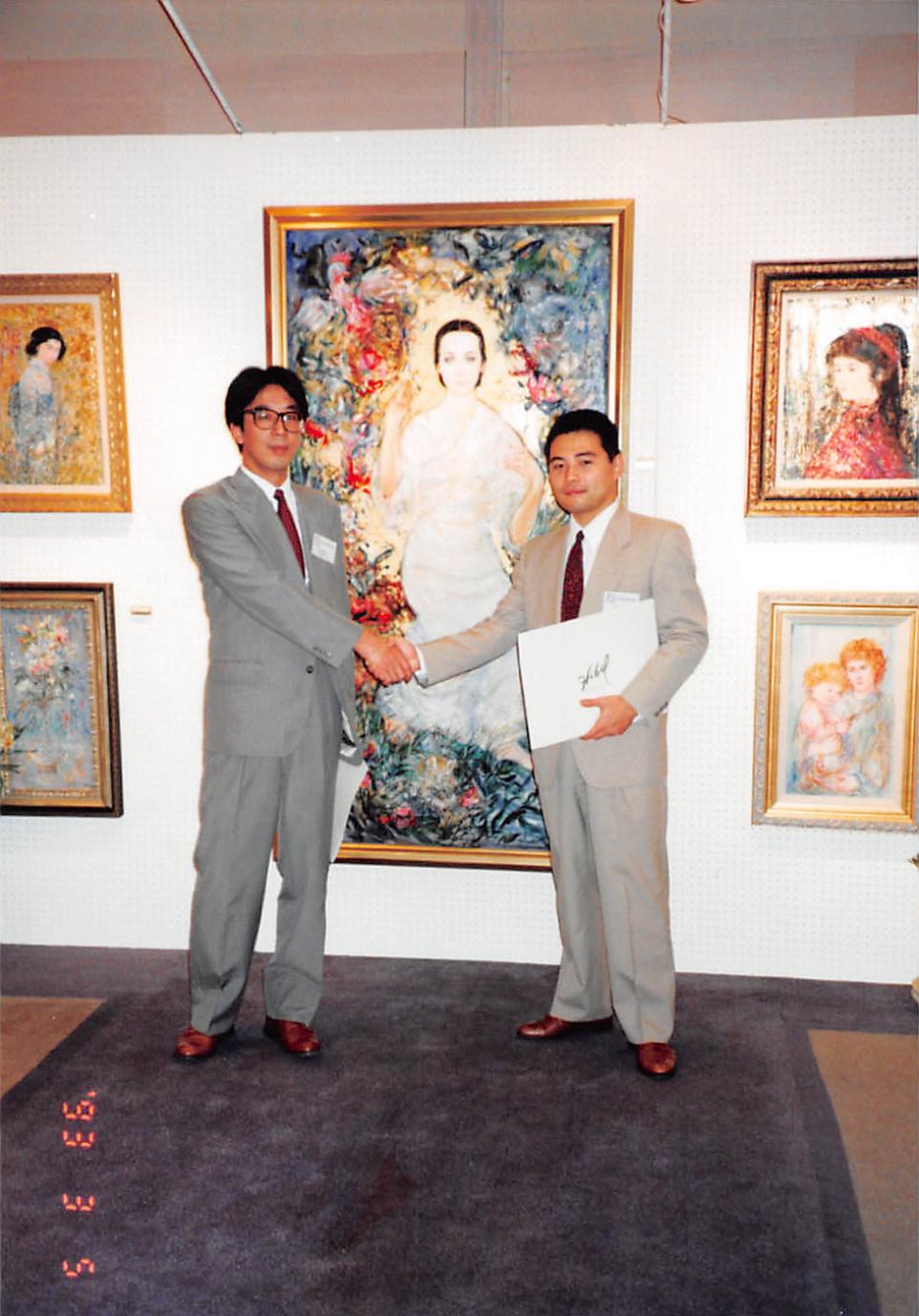
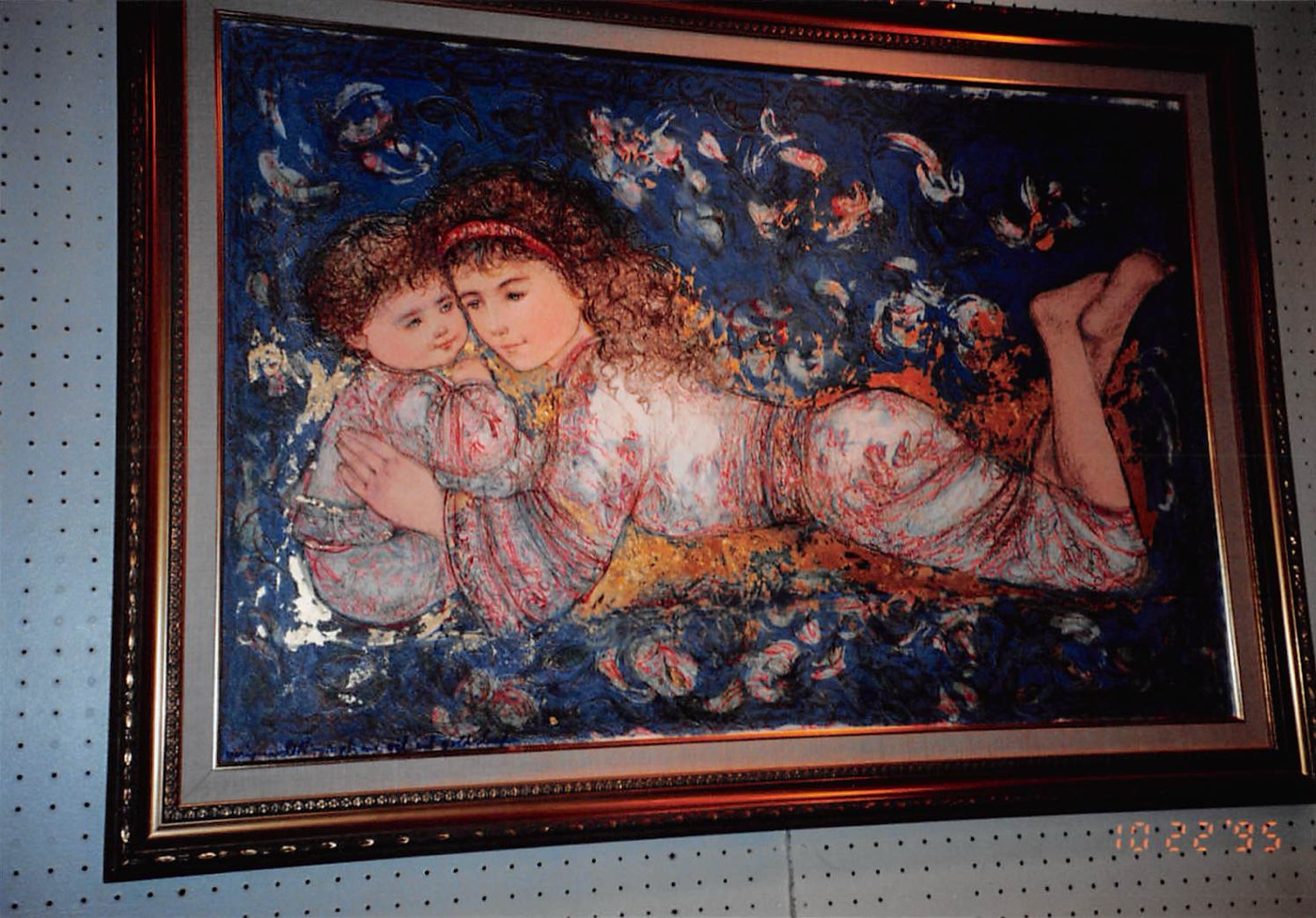
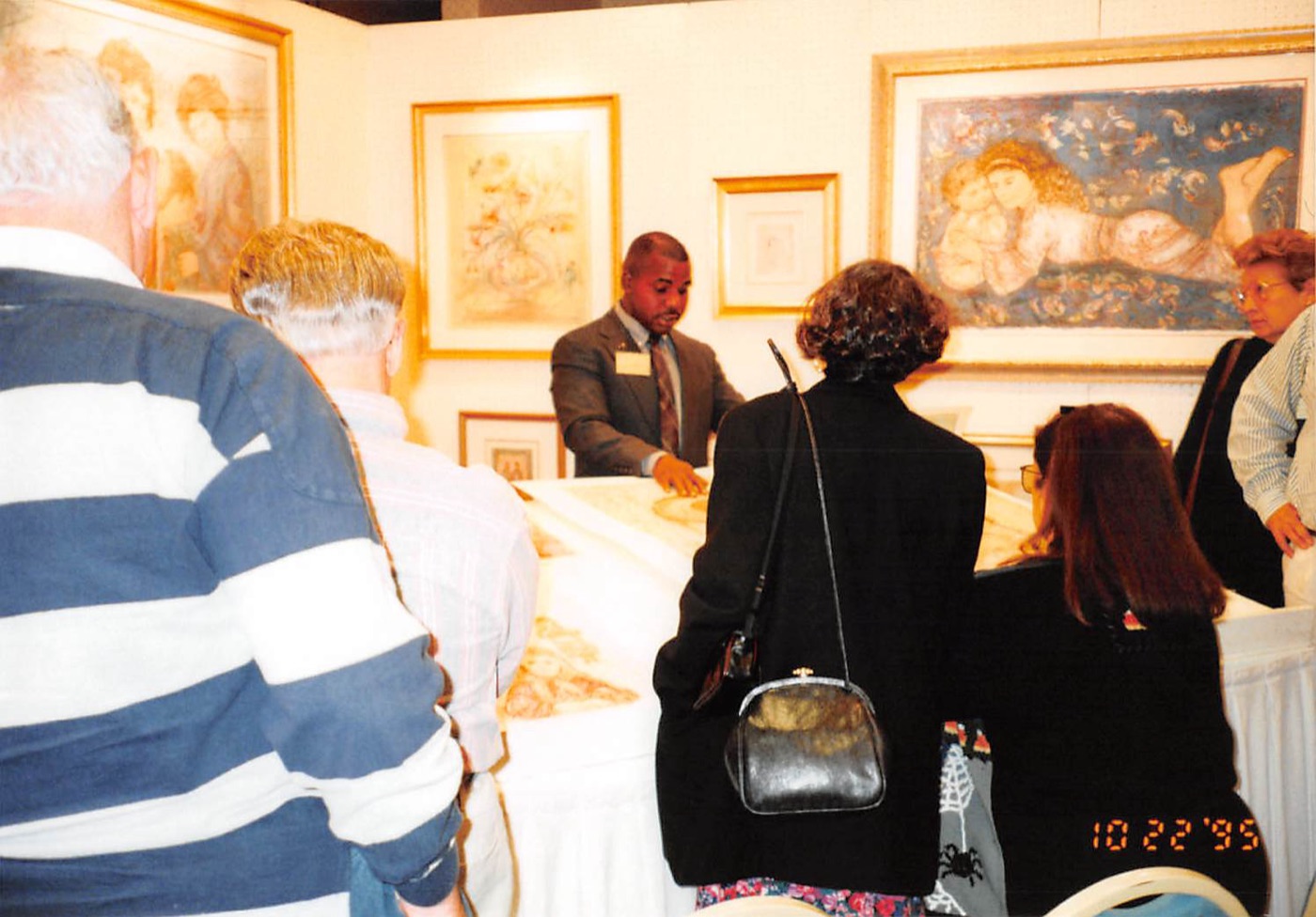
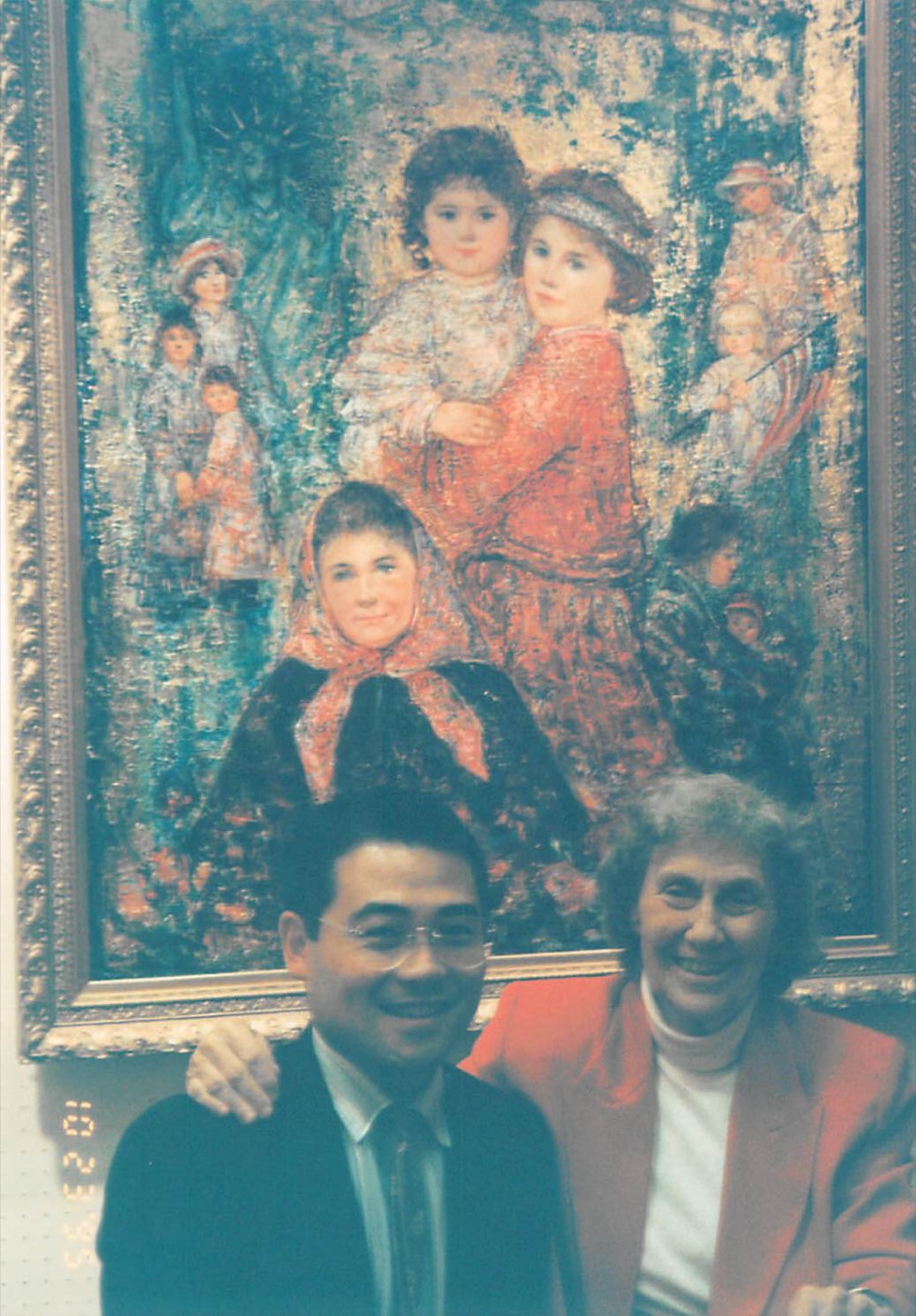
Some of what passed through my hands
Works I sourced, exhibited or sold as a dealer. A few I could never bring myself to sell; about fifty are still with me.
A dealer decides in one second. That second takes ten years.
At a dealers’ auction there is no time to reason. The work goes up, the bids go in, and it is gone. You learn to see — or you learn by losing money. I did both.
Japanese has a word for what that leaves you with: mekiki (目利き), a keen eye — the ability to tell at a glance what is genuine and what is good. It is what this service is named for, and it is the one thing I can lend you.
Five plates tied with string
At an auction in Nagoya, a bundle of five plates came up, tied together so that only part of the top one showed. Nobody in the room seemed sure what they were.
I was. They were hand-painted and fired by Nakamura Masayoshi, each with a face in his unmistakable brush — and a full set of five is rare. I put my bid in first. Untied, framed one by one, each plate found a collector at about four times what I had paid for all five.
The fake at five metres
A client once slid a “Nakamura Masayoshi” out of its yellow cloth bag across the room from me. I knew before it was fully out. The colours were his; the paint lay flat and the brush had no force.
Another carried the right style with the wrong decade’s signature and seal. Another was a print on canvas, sold as an oil. I also bought a fake myself, early on, and tore it up. It was the most useful money I ever lost.
詩情 — shijō, the poetry in a picture
Japanese dealers have a blunt word, uri-e: a picture painted to sell. It can be pretty, and it can be perfectly honest decoration. It is not what you fly across the world for.
The other kind was made because the artist had to make it. It has what we call shijō — a poetry that speaks back to you. No certificate records it. Learning to feel it is what my ten years bought, and it is what I bring into the room for you.
“By the third day you will not need me to tell you which one is good. That is the part of this I like best.”Taito Morita
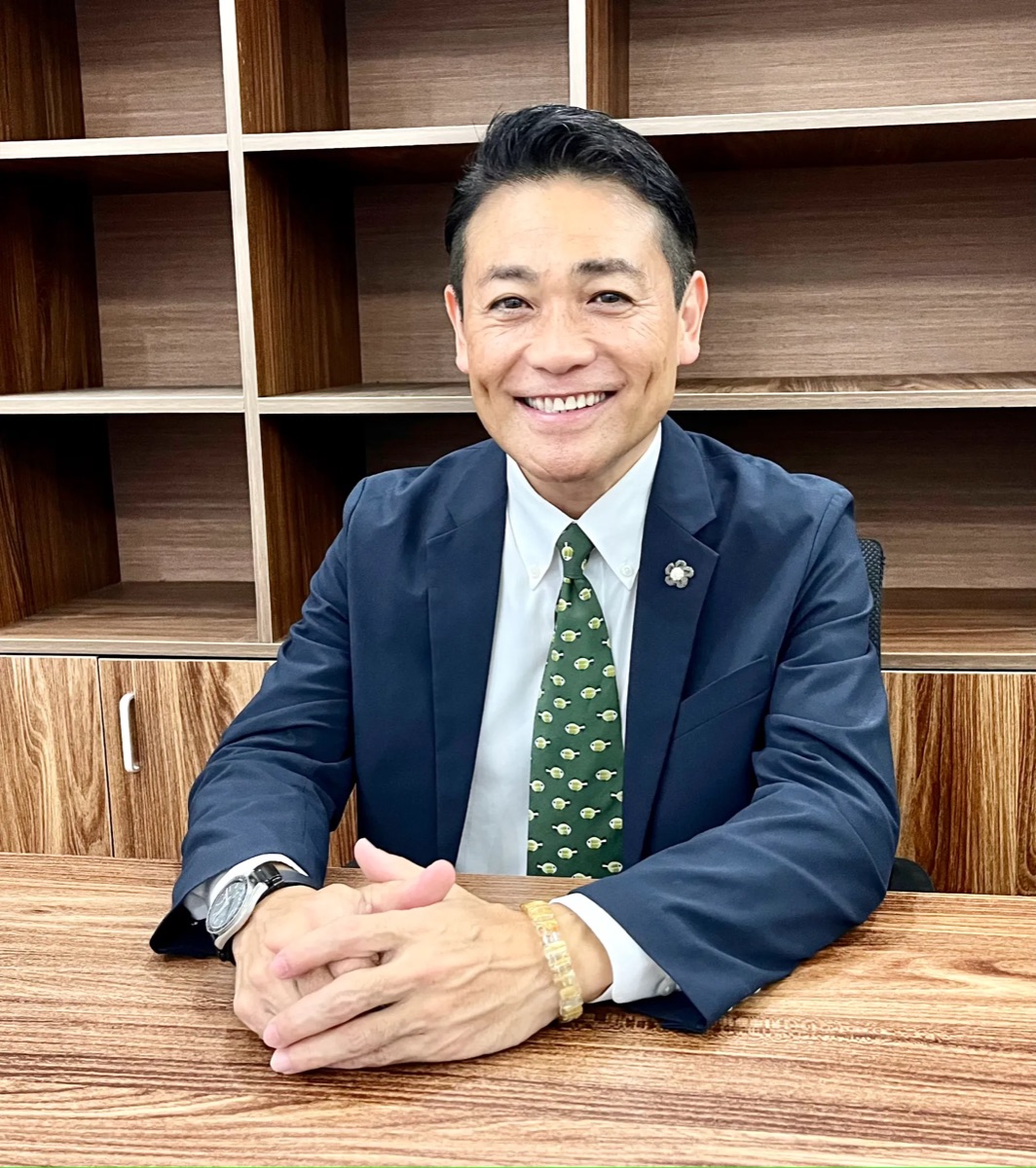
Taito Morita
Former gallerist, author, and — for the days you are in Japan — the person standing next to you who has nothing to sell.
I grew up in Toyohashi, halfway between Tokyo and Kyoto, and spent my middle-school years in Laramie, Wyoming, where ours was the only Japanese family in town. I arrived with a paper dictionary and left with a second language.
I trained as an electrical engineer and worked as a systems engineer before a single painting in Florida turned me into an art dealer. I ran Fine Art J-HAT for more than ten years. I then gave the next part of my life to education, and today lead a school teaching abacus, calligraphy and art to children in about a hundred classrooms in Japan and in Hanoi.
I never stopped looking at pictures. About fifty works from my dealing years are still with me. This service is my return to the part of the trade I loved most: standing in front of a work with someone, and helping them see it.
- Gallery
- Founder, Fine Art J-HAT, Toyohashi (opened 1993)
- Representation
- Exclusive agent in Japan for Edna Hibel
- Exhibitions
- Mitsukoshi Ikebukuro, Daimaru Kobe and other department-store galleries
- Books
- What Does an Art Dealer See in One Second? (2026, in Japanese) · a book on intuition from Dōbunkan Shuppan (2012) · several further titles on education
- Languages
- Japanese (native), English
- Based in
- Toyohashi, Aichi — on the Tōkaidō Shinkansen between Tokyo and Kyoto
Whose side I am on.
An adviser is only useful if you know exactly where their interest lies. Mine is set out here before we ever speak.
One fee, from you
My fee is US$3,000 for each day I accompany you, agreed in writing before you travel. It covers the preparation, the appointments and the follow-up as well as the day itself. I take no commission from any gallery or dealer, so I earn the same whether you buy a great deal or nothing at all.
Nothing of my own to sell
I do not offer you works from my own collection. Every piece we consider belongs to a third party, and I have no stake in which one you choose.
You buy directly
The sale is between you and the gallery. You receive their invoice and their documents in your own name; I make sure you understand every line.
An opinion, honestly labelled
What I give you is an experienced dealer’s judgement, not a certificate of authenticity. Where a work calls for the recognised authority’s certificate, I will say so and help you ask for it.
Clear about export
Some older works need export clearance from Japan’s cultural authorities, and designated cultural properties cannot leave the country. I raise this before you commit, not after.
Discretion
I do not name my clients or what they bought — not on this website, and not to the next dealer we visit.
Before you write.
Do I need to know anything about Japanese art?
No. You need to know what you respond to, and even that we can find out together. I ask every client to do one thing in each room: choose the single work you would take home. Do it a dozen times and your own eye begins to appear.
Which cities do you cover?
I am based in Toyohashi, a bullet-train stop between Tokyo and Kyoto, so both are easy, as are Nagoya and Osaka. Other regions — Kanazawa, or the pottery towns — can be arranged with a little more notice.
Do you arrange hotels and transport?
No. Your flights, hotels and cars stay with you or your travel adviser, and I am glad to coordinate with them. I plan and lead the art.
What if I see nothing I want to buy?
Then you buy nothing, and I will think more of you for it. My fee does not depend on a purchase, and the worst thing a collector can bring home is a picture bought to justify the trip.
How will the work get home?
Small works can sometimes travel with you. For everything else, a specialist fine-art shipper packs, insures and delivers to your door, and handles customs at both ends. I obtain the quotation and stay on it until delivery.
How far ahead should I get in touch?
Four to six weeks is comfortable. The best dealers see people by appointment, and good appointments take a little arranging.
Tell me when you will be in Japan, and what you love.
I reply personally, in English, normally within two working days. A first conversation carries no obligation. I accompany only a small number of clients each season, so that each one has my whole attention.
Travel designers, family offices and hotel concierges enquiring on a client’s behalf are welcome.